


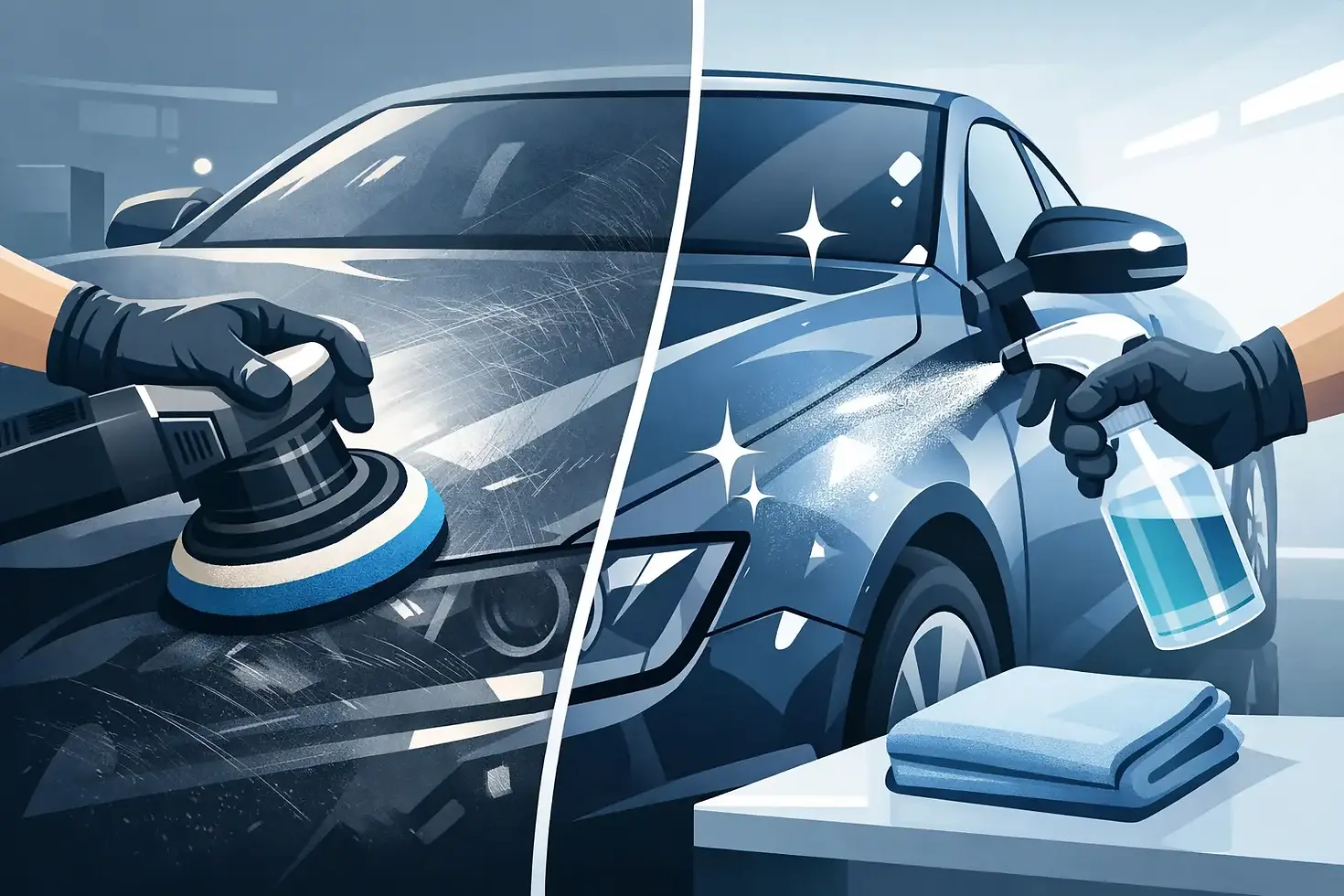
Paint Correction Before Ceramic Coating
- jcsautosalon
- May 16
- 6 min read
A ceramic coating can make paint look richer, slicker, and easier to maintain, but it will not hide flaws that are already there. That is why paint correction before ceramic coating matters so much. If the surface has swirl marks, light scratches, water spot etching, or oxidation, the coating will lock those defects in and make them more noticeable once the finish is glossy and protected.
That catches a lot of vehicle owners off guard. They hear “coating” and assume the product will fix the paint. In reality, a ceramic coating is a protective layer, not a repair process. The real finish is created during prep.
Why paint correction before ceramic coating matters
Think of ceramic coating as a clear lens over your paint. If the paint underneath is clean, level, and polished properly, the final result looks deep and reflective. If the paint underneath is scratched and dull, the coating preserves that condition too.
This is the biggest reason professional shops put so much effort into correction work. Proper polishing removes or reduces surface defects in the clear coat so the coating goes onto a better surface. That improves appearance, but it also helps with performance. A properly prepped surface gives the coating a better chance to bond evenly and deliver the durability customers expect.
There is also a value issue here. Ceramic coatings are not bargain services, and they should not be treated like a quick add-on. If you are investing in long-term paint protection, it makes sense to fix what can be corrected first. Otherwise, you are paying to seal in imperfections.
What paint correction actually fixes
Paint correction is the process of machine polishing the clear coat to remove or significantly reduce visible defects. The exact approach depends on the vehicle, paint condition, paint hardness, and the result the owner wants.
Common issues that can often be improved include swirl marks from improper washing, light scratches, oxidation, haze, buffer trails, and some water spot damage. On darker colors especially, these defects stand out under sunlight or shop lighting. After correction, the paint usually looks clearer, glossier, and much sharper.
What it does not do is magically repair everything. Deep scratches that go beyond the clear coat, rock chips, peeling clear, and areas with severe failure may require touch-up, sanding, repainting, or other refinishing work. A good shop should be honest about that. Paint correction is highly effective, but it has limits.
One-step vs. multi-step correction
Not every vehicle needs the same level of correction before coating. That is where experience matters.
A one-step correction is often a strong fit for newer vehicles, well-kept daily drivers, or owners who want a major visual improvement without chasing near-perfect paint. This process usually removes a meaningful amount of light defects while boosting gloss and clarity.
A multi-step correction is more intensive. It is typically chosen for vehicles with heavier swirl marks, deeper defects, neglected paint, or owners who want a more refined finish. This approach takes more time because it involves a stronger cutting stage followed by one or more refining stages to restore clarity and gloss.
The trade-off is simple. More correction usually means more labor, more precision, and a higher investment. It can also mean removing more clear coat than a lighter polish, so the right goal is not “remove everything at all costs.” The right goal is to improve the finish responsibly.
Why prep work affects coating performance
People often focus on the look of ceramic coating, but prep also affects how the product performs over time.
Before a coating is applied, the paint should be washed thoroughly, decontaminated, and polished as needed. That removes bonded contaminants, old residues, and defects that interfere with a clean, uniform surface. After polishing, the surface is typically wiped down to remove polishing oils so the coating can bond directly to the paint.
If that process is rushed, a coating may still be applied, but the result may not be as clean or consistent. You can end up with uneven gloss, missed defects, or reduced durability. In other words, the coating itself may be high quality, but poor prep can hold it back.
This is one reason skilled shops treat ceramic coating as a system rather than a bottle. The product matters, but the correction and prep are what make the final result worth it.
Does every car need paint correction before ceramic coating?
Usually, yes, but the level varies.
Brand-new vehicles still often need some degree of correction. A new car may look flawless at first glance, but dealership washing, transport film removal, and lot exposure can leave behind light marring, fine swirls, or minor contamination. It is common for a new vehicle to benefit from at least a light polish before coating.
Used vehicles almost always need more attention. Even well-maintained cars tend to have some wash-induced defects, water spots, or dullness in the clear coat. The older the vehicle and the less careful the maintenance history, the more likely it is that meaningful correction will improve the outcome.
There are exceptions. If a vehicle has extremely delicate paint, very thin paint, or previous repair concerns, the correction plan may need to be conservative. That is why inspection matters. A reputable installer should evaluate the condition and recommend the right level of correction instead of pushing the same package on every car.
What to expect from the process
Professional paint correction before ceramic coating is not a quick wash and wax. It is a detailed process built around inspection and precision.
The vehicle is typically washed to remove loose dirt, then chemically and mechanically decontaminated to pull embedded contaminants from the paint. From there, the paint is inspected under proper lighting to identify swirls, scratches, haze, and other issues. Test spots may be used to determine the combination of pads, compounds, and polish needed to get the best result without overworking the finish.
Once correction is complete, the paint is refined, cleaned, and prepped for coating application. The coating is then applied in controlled sections, leveled properly, and allowed to cure based on the product requirements.
For the customer, the biggest takeaway is that quality work takes time. If a shop promises major correction and coating at an unusually fast turnaround, it is fair to ask how much prep is really being done.
The difference you can actually see
When correction is done properly, the coating has a clean foundation to work with. The paint reflects light more evenly, darker colors gain depth, metallic flake shows more clearly, and the overall finish looks more refined. The slick feel and hydrophobic behavior of the coating then add protection and easier maintenance on top of that improved surface.
That sequence matters. Correction creates the finish. Coating preserves it.
For owners who care about resale value, pride of ownership, or simply enjoying how their vehicle looks every day, that difference is easy to appreciate. It is especially noticeable on black, gray, blue, and red paint, where swirl marks tend to show the most.
Choosing the right shop for paint correction before ceramic coating
This is one of those services where experience shows up in the details. Anyone can sell a coating. Not every shop has the eye, lighting, tools, and patience to correct paint properly first.
Ask how the paint is evaluated, what level of correction is included, and what defects can realistically be removed. Ask whether the shop tailors the process to the vehicle or uses the same approach on every job. If the answers are vague, that is a red flag.
A specialist shop should be able to explain the trade-offs clearly. Some owners want a strong improvement for a daily driver. Others want a more intensive finish on a weekend vehicle or luxury car. Both are valid. What matters is matching the process to the vehicle and the owner’s expectations.
At JC Auto Salon, that prep-first mindset is a big part of what separates a real protection service from a surface-level package. When paint is corrected properly before coating, the final result looks better on day one and holds up better over time.
If you are considering ceramic coating, do not just ask what product is being used. Ask what is being done to the paint before it ever touches the coating. That is where the result is decided.


Comments